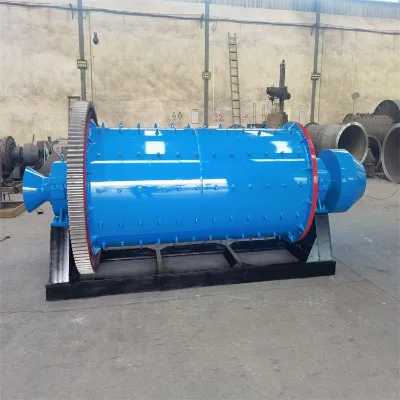
Source mini laboratory ball mill for mining, lab, and crushing
Compare 30 mini laboratory ball mill options from verified Chinese suppliers. View specifications like rotation speed, motor power, and capacity to find the right equipment for your mining, lab, or crushing needs.
Key considerations
Products List




Comprehensive Sourcing Guide
Strategic Sourcing Guide for Mini Laboratory Ball Mill Equipment
Procuring a mini laboratory ball mill requires a rigorous approach that balances precise technical requirements with supply chain reliability. For buyers in the mining, materials science, and chemical research sectors, the selection process is not merely about finding a machine that grinds materials; it is about securing a reliable instrument capable of delivering reproducible particle size reduction under specific constraints. The market presents a variety of configurations, from benchtop planetary mills to specialized drum units, each serving distinct operational needs. This guide outlines the critical factors for evaluating these assets, ensuring that procurement decisions are grounded in verified specifications rather than marketing assertions.
Technical Specifications and Operational Parameters
The foundation of any successful procurement lies in a detailed understanding of the technical specifications. When sourcing a mini laboratory ball mill, buyers must scrutinize the drum dimensions, rotation speed, and motor power, as these directly dictate the energy input and resulting particle size distribution. Observed market data indicates a range of drum sizes, with specific configurations such as a diameter of 500mm by 500mm being available for certain models. The rotational speed is another critical variable; a standard operating speed of 48rpm is observed in specific units, which influences the grinding kinetics.
Motor power and voltage compatibility are equally vital. The market features units with motor powers ranging from 1.5kw to 15kw, suggesting a wide spectrum of energy consumption profiles. Voltage requirements vary significantly, with listings showing both 220V and 380V options. Procurement teams must verify that the facility's electrical infrastructure can support the selected voltage without requiring costly retrofits. Furthermore, the feeding capacity and load capacity of the abrasive media must align with the intended throughput. Some models offer a feeding capacity of 5kg with a load capacity of 100kg for abrasive materials, while others may support higher throughput rates, such as capacities ranging from 40 to 1600kg per hour in larger industrial variants.
The discharge size is a primary performance metric for laboratory applications. High-performance units are capable of achieving discharging sizes as fine as -0.1 micron, a specification essential for advanced material synthesis. The maximum feeding size also varies; some models accept feed sizes up to 120mm, while others designed for finer pre-processing may limit input to 10mm. Buyers should also consider the material of construction, with carbon steel being a common specification for durability. The core components, including bearings, motors, and gears, determine the longevity and maintenance frequency of the equipment.
Compliance, Certification, and Safety Standards
In the B2B industrial sector, compliance with international standards is non-negotiable. When evaluating suppliers, buyers must verify that the equipment carries recognized certifications. The market data confirms the presence of CE and ISO9001 certifications for various models, indicating adherence to European safety directives and international quality management systems. However, the presentation of these certifications in product listings can sometimes be ambiguous, such as when certification data is concatenated with color specifications. Procurement teams must demand clear, separate documentation for each certification to ensure validity.
Safety standards are particularly important for laboratory environments where human operators interact closely with machinery. The condition of the equipment, often listed as "New," implies adherence to current safety protocols, but this should be verified against local regulatory requirements. The warranty period is another indicator of manufacturer confidence; a standard one-year warranty is frequently observed, though some suppliers may offer extended terms. Buyers should ensure that the warranty explicitly covers core components like the motor and gears, which are the most expensive parts to replace.
Cost Drivers and Pricing Dynamics
The pricing of mini laboratory ball mills is influenced by a complex array of factors, including motor power, drum capacity, and the level of customization. The observed price range in the market is extensive, spanning from $900 to $570,000. This vast disparity reflects the difference between basic benchtop instruments and highly specialized, high-capacity systems. The "Best" price claims found in listings are subjective and should be treated as marketing language rather than a benchmark. Instead, buyers should focus on the total cost of ownership, which includes energy consumption, maintenance, and potential downtime.
Customization is a significant cost driver. Many suppliers offer customized solutions, which can alter the price structure considerably. The level of customization, such as specific drum dimensions or tailored control systems, will directly impact the final quote. Additionally, the packaging method, whether standard wooden packing, plywood cases, or nude container shipping, affects logistics costs. Buyers must account for these variables when budgeting, as the initial purchase price is only one component of the total expenditure.
Typical Applications and Material Compatibility
Mini laboratory ball mills are versatile tools used across various industries, primarily for crushing and fine grinding applications. The observed applications include mining, where the equipment is used to process ores, and laboratory settings for material testing. The ability to handle different sample types, including hard, medium-hard, and soft materials, is a key feature of these machines. This versatility makes them suitable for research and development in fields ranging from geology to pharmaceuticals.
The specific model selection should be driven by the application requirements. For instance, a planetary ball mill is often preferred for high-energy grinding in laboratory settings, while a drum mill might be more suitable for continuous processing. The feeding size and discharge size capabilities must match the specific material properties and the desired end-product particle size. Buyers should verify that the machine can handle the specific hardness and abrasiveness of the materials they intend to process to avoid premature wear or inefficient grinding.
Supplier Evaluation and Verification
Evaluating suppliers requires a methodical approach to ensure reliability and product quality. The origin of the equipment is a critical factor, with many suppliers based in Shandong Province, Weifang City, China. While this region is a known hub for industrial machinery, buyers must verify the specific factory credentials and production capabilities. Brand names such as Gelin are observed in the market, but the absence of a specific brand should not deter procurement if the technical specifications and certifications are verified.
The lead time and delivery date are also essential considerations. Some suppliers offer immediate delivery with a "2 Days as in Stock Now" status, while others may have longer production cycles. Buyers must confirm the actual availability of the specific model required, as stock levels can fluctuate. The testing services provided by the supplier, such as sample testing for hard, medium-hard, and soft materials, can be a valuable indicator of the supplier's technical competence. After-sales support, including engineer online support, is another critical factor that ensures long-term operational stability.
Quality Control and Inspection Protocols
Implementing a robust quality control protocol is essential before accepting delivery of the equipment. Buyers should verify the condition of the machine, ensuring it is indeed new and free from defects. The packing method, whether it be a plywood case or standard wooden packing, should be inspected to ensure the equipment is protected during transit. The standard dimensions of the machine, such as 1200750920mm for certain models, should be confirmed to ensure it fits within the designated laboratory space.
Inspection should also focus on the core components. The bearings, motor, and gears should be examined for quality and compatibility with the machine's specifications. The energy-saving features, if claimed, should be validated through performance testing. Buyers should request test results or performance data that demonstrate the machine's ability to achieve the specified discharge size and throughput. If the supplier offers a guarantee of 1 year, the terms of this guarantee should be clearly understood, including what is covered and what constitutes a valid claim.
Long-Term Procurement Considerations
Long-term procurement considerations extend beyond the initial purchase to include maintenance, spare parts availability, and scalability. The warranty period, typically one year, provides a baseline for support, but buyers should consider the long-term availability of spare parts for core components like motors and gears. The customization options available can also impact future scalability; a machine that can be adapted for different applications offers greater value over time.
The energy efficiency of the equipment is another long-term consideration. Models labeled as "Energy Saving" may offer reduced operational costs over the lifespan of the machine. Buyers should analyze the power consumption relative to the throughput to determine the most cost-effective option. Additionally, the availability of technical support, such as online engineer assistance, ensures that any operational issues can be resolved quickly, minimizing downtime. By focusing on these long-term factors, buyers can make procurement decisions that support sustained operational efficiency and cost-effectiveness.
Comparative Analysis of Key Models
To facilitate decision-making, it is useful to compare key models based on their specifications. The following table summarizes the observed variations in critical parameters:
| Feature | Model STQM-1 | Model XMQ Series | Planetary Lab Mill |
|---|---|---|---|
| Drum Size | 500x500mm | Varies (e.g., 150*50) | Bench Top Instrument |
| Rotation Speed | 48rpm | Variable | Variable |
| Motor Power | 1.5kw | Up to 15kw | Variable |
| Voltage | 220V / 380V | Variable | Variable |
| Feed Size | 5kg capacity | 50~120mm | Max 10mm |
| Discharge Size | Variable | -0.1 Micron | -0.1 Micron |
| Certification | CE, ISO9001 | CE, ISO9001 | CE, ISO9001 |
| Origin | China (Shandong) | China (Weifang) | China |
| Warranty | 1 Year | 1 Year | 1 Year |
This comparison highlights the diversity in specifications available in the market. Buyers must carefully match these parameters to their specific operational needs, ensuring that the selected model offers the required throughput, particle size reduction, and energy efficiency. By adhering to these guidelines, procurement teams can navigate the complexities of sourcing mini laboratory ball mills with confidence and precision.
FAQs
What are the standard drum dimensions for mini laboratory ball mills?
Standard drum dimensions observed include a diameter of 500mm by 500mm for specific models like STQM-1. Buyers should verify exact dimensions against their sample load requirements before purchasing.
Can these mills achieve a discharge size of -0.1 micron?
Yes, high-performance units are capable of achieving discharging sizes as fine as -0.1 micron. This capability is essential for advanced material synthesis and requires specific model configurations.
What certifications do these machines typically hold?
Many models carry CE and ISO9001 certifications indicating adherence to safety and quality standards. Buyers must request separate documentation for each certification to ensure validity and compliance.
How long is the typical warranty period for this equipment?
A standard one-year warranty is frequently observed for these machines. This warranty should explicitly cover core components like the motor and gears to ensure long-term operational stability.
What is the maximum feeding size for the larger industrial variants?
Larger industrial variants can accept feed sizes up to 120mm. Smaller laboratory units may limit input to 10mm, so selection depends on the initial material particle size.
Where are these manufacturers primarily located?
Many suppliers are based in Shandong Province, specifically Weifang City, China. This region is a known hub for industrial machinery, but specific factory credentials should always be verified.
What is the price range for mini laboratory ball mills?
The observed price range spans from 900 to 570,000 USD depending on specifications. This disparity reflects differences between basic benchtop instruments and highly specialized, high-capacity systems.
Are customization options available for these ball mills?
Customization is available for many models, allowing for specific drum dimensions or tailored control systems. The level of customization will directly impact the final quote and lead time.